
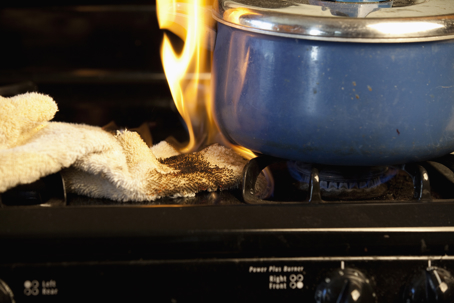
Walking back into your home after a fire and still smelling smoke days later is one of the most disheartening moments in recovery. You’ve cleaned. You’ve opened windows. You may have even bought an air purifier. And yet the smell remains. This isn’t a sign you did something wrong. It’s a sign that smoke behaves differently than most people expect. It’s something our team at Southeast Restoration has worked through with homeowners and business owners for more than 25 years.
Understanding why the odor is still there is the first step toward getting rid of it for good. Once you know what you’re actually dealing with, the path forward becomes a lot clearer and a lot less stressful.
Why Smoke Odor Lingers Long After the Fire Is Out
Smoke isn’t just what you see. The particles released during a fire are microscopic, small enough to travel through the air and settle deep inside porous building materials like drywall, insulation, carpeting, subflooring, and upholstery. Visible soot on a wall is only part of the picture. The materials behind that wall have likely absorbed smoke as well.
The HVAC system makes this worse. If it was running during or after the fire, the ductwork pulled smoke-laden air through every room in the house, not just the one where the fire started. Smoke particles deposit throughout the entire system and continue cycling back into living spaces long after the initial event.
Knoxville’s humid climate adds another layer of difficulty. East Tennessee summers slow the drying of smoke-saturated porous materials considerably. The longer those materials stay damp, the deeper odor compounds penetrate. The longer that window stays open, the greater the risk that mold begins to develop alongside the smoke damage.
Why Home Remedies Only Mask the Smell
Scented candles, spray deodorizers, and plug-in air fresheners are designed to cover odors, not remove them. They introduce a competing scent but do nothing to address the smoke particles still embedded in your walls, floors, and furniture. A few days later, the smoke smell returns because its source was never touched.
Surface cleaning is a necessary part of the process, but it has limits. Wiping down walls and mopping floors removes visible soot, yet particles trapped inside wall cavities, beneath flooring, and in insulation stay exactly where they are. This is why many homeowners are surprised when the smell comes back a week after what felt like a thorough cleaning job.
Store-bought ozone generators are sometimes marketed as a solution. Ozone can oxidize odor compounds, but consumer-grade units are typically underpowered for meaningful fire odor removal. Any ozone treatment carries real risk. The space must be unoccupied during use, including pets, and ventilated thoroughly before anyone re-enters. Incorrect use can also damage rubber, plastics, and certain fabrics, in addition to posing health risks.
How Professional Smoke Odor Removal Works
Professional fire damage restoration treats smoke odor as a contamination problem, not just a cleaning problem. The process starts with an inspection to determine exactly how far smoke has traveled and which materials can be deodorized in place versus which need to be removed entirely.
Several methods are used depending on the severity and the materials involved:
- Hydroxyl generators produce reactive molecules that break down odor compounds in the air and on surfaces at a molecular level. Unlike ozone, hydroxyl generators can be used in occupied spaces, making them a practical choice in many situations.
- Ozone generators at professional concentrations are significantly more effective than consumer units. They oxidize odor molecules throughout a space but require the building to be fully unoccupied during treatment (including pets) and properly ventilated before re-entry.
- Thermal fogging uses a heated solvent to create a fine fog that penetrates the same porous materials smoke did, neutralizing odor compounds where surface cleaning can’t reach.
- Odor-sealing primer is applied after deodorization to lock any remaining volatile organic compounds (the chemical byproducts of combustion that carry odor) inside materials that can’t be fully removed, such as structural framing or subfloor panels that tested within acceptable ranges.
HVAC ductwork gets separate attention. After a fire, it typically needs to be inspected, cleaned, and sometimes sealed to prevent the system from redistributing odor throughout the property. Skipping this step is one of the most common reasons smoke odor seems to return after a home has otherwise been cleaned.
Documenting Smoke Odor Damage for Your Insurance Claim
Odor damage that isn’t visible is still real damage. Smoke residue trapped in insulation or inside ductwork can’t be seen on a walk-through, but an insurance adjuster needs documentation to evaluate it as part of your claim. Photos, moisture readings, and written reports from a restoration professional all help establish the scope of damage that goes beyond what’s visible.
Before scheduling any specialized deodorization treatment, contact your insurance company to understand how that service is covered under your policy. Treatments like professional ozone or thermal fogging are handled differently by different carriers, and knowing your coverage ahead of time prevents surprises. We work alongside our customers through the claims process as part of our fire damage restoration work, and helping clients document their damage thoroughly leads to better outcomes all around.
When to Call for Professional Help
A minor smoke odor from a small, contained fire (say, a pot left on the stove) may respond to thorough ventilation and careful surface cleaning on your own. But the more significant the fire, the less likely DIY efforts will reach everything smoke has touched.
A few signs that professional help is the right call:
- Odor persists after basic cleaning despite thorough ventilation and surface cleaning
- The smell is present in rooms far from where the fire started, which points to HVAC-driven contamination
- The HVAC system was running during or after the fire, meaning smoke was actively distributed throughout the property
- Damage spans multiple rooms or involves materials like insulation, carpeting with padding, or drywall that can’t be cleaned from the surface alone
Our team at Southeast Restoration can assess how far smoke has traveled through a property before deciding what needs cleaning, sealing, or removal. With more than 250 employees and over 25 years of fire damage restoration experience in Knoxville, we move quickly and methodically. Every day the odor lingers is another day smoke particles continue to work deeper into your home.
A Solvable Problem
A smoke smell that won’t go away is frustrating, but it isn’t permanent. With the right process, the right equipment, and a team that takes the time to find where the smoke actually traveled, this is a problem that gets solved. We approach every fire damage restoration project with the same care we’d want for our own families, and our warrantied work means you can feel confident in the results. If you’re dealing with persistent smoke odor after a fire, Southeast Restoration is ready to help. Call us at (877) 688-6050.


